
Searching for Reliable Bangalore to Hyderabad FTL Services?
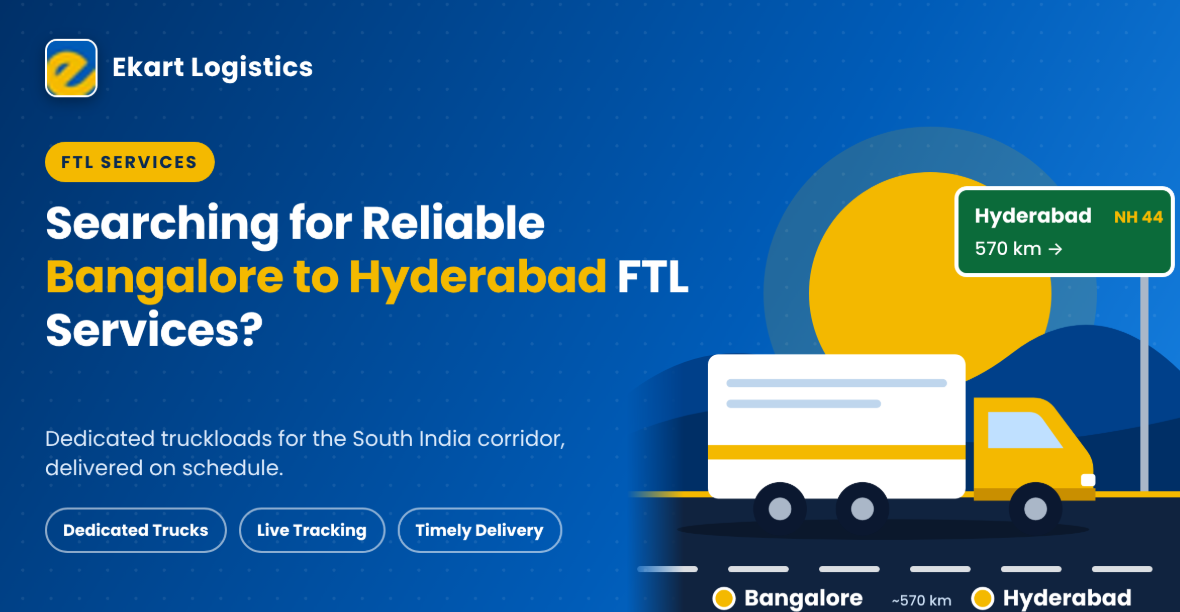
Bangalore and Hyderabad are important commercial centres in southern India, supporting manufacturing, technology, retail, industrial production, consumer goods, and wholesale distribution. Businesses operating between these cities often need to transport finished products, raw materials, packaged merchandise, and warehouse inventory. Bangalore to Hyderabad FTL Services provide a dedicated transportation option for companies that require an entire truck for a commercial consignment. This arrangement can be particularly useful when the volume of goods justifies using a full vehicle or when businesses prefer to keep their shipments separate from other customers’ cargo.
Full Truck Load transportation allows companies to plan a consignment around their loading requirements and dispatch schedules. Instead of combining several independent shipments in one vehicle, the business arranges dedicated capacity for its own goods. This can simplify loading coordination and reduce the need to organise handling around unrelated consignments. However, the decision to use FTL should be based on shipment weight, cargo dimensions, packaging, vehicle capacity, and delivery requirements rather than on the assumption that a dedicated truck is always the best option.
Businesses moving goods between Bangalore and Hyderabad may operate through different distribution models. A manufacturer might transfer finished products to a regional warehouse, while a retailer may replenish stock at a distribution centre. A wholesaler could need to fulfil a large commercial order, and an industrial business may regularly transport materials between facilities. Each situation requires a transportation plan that reflects the cargo, the receiving location, and the wider operational schedule.
The choice of service should also consider shipment size. Businesses with substantial consignments may benefit from a dedicated vehicle, while smaller shipments could be suitable for shared-capacity arrangements. Companies should compare the available options according to shipment volume, handling requirements, service conditions, and total cost. This assessment helps organisations select transportation that matches their actual needs rather than committing to unnecessary vehicle capacity.
Benefits of Dedicated Freight for Business Operations
Dedicated truck capacity can help businesses organise substantial shipments with a clearer loading and dispatch plan. Allocating a vehicle to one consignment allows the shipper to coordinate goods preparation according to its own requirements. This can be useful when transporting large orders, bulky products, or consignments that need a planned loading arrangement. Proper packaging and secure loading are still essential, as the cargo must be protected against movement and the handling conditions associated with road transportation.
Transportation planning also involves coordinating dispatch with production, inventory, and warehouse operations. A shipment that is not ready when the vehicle arrives may disrupt the loading schedule. Similarly, a receiving location that lacks sufficient space or staff may struggle to accept an incoming consignment. Businesses can reduce these difficulties by confirming shipment readiness, checking documentation, and coordinating the planned movement with both locations before dispatch.
Companies considering express cargo shipping should define what they mean by an urgent shipment and confirm the available service arrangements. Some consignments may need to move according to production requirements or inventory commitments, while others allow greater flexibility. Businesses should communicate their expected dispatch dates and ask the provider to confirm the applicable transit arrangement. Traffic, road conditions, weather, and other operational factors can affect transit times, so planning should account for reasonable uncertainty.
Provider selection should involve more than comparing freight prices. Businesses need to evaluate vehicle suitability, route availability, booking procedures, documentation requirements, pricing transparency, and communication arrangements. They should clarify who is responsible for loading and unloading, whether special handling is available, and how changes to shipment details will be managed. Understanding these points before booking helps establish clear expectations for the movement.
For companies handling smaller consignments, part truck load services may be worth evaluating alongside dedicated truck transportation. Shared-capacity arrangements can be suitable when the shipment does not justify an entire vehicle, provided the service accommodates the cargo and the business’s delivery requirements. Comparing these options helps businesses make decisions based on load size, urgency, and operating costs.
Planning Freight Movements with Ekart Logistics
Ekart Logistics can be considered by businesses evaluating freight transportation options between Bangalore and Hyderabad. Companies preparing a shipment should identify its origin, destination, cargo category, total weight, package dimensions, and expected dispatch date. They should also provide details about loading access, receiving arrangements, and any special handling requirements. Complete information helps establish the transportation need and supports a more informed discussion about suitable service options.
For businesses reviewing third party logistics for ecommerce, freight transportation may be one part of a broader distribution process. Ecommerce organisations often coordinate inventory transfers, warehouse replenishment, and product movement between operational facilities. A dedicated truck may support a large stock transfer, while warehouse operations, packaging, inventory management, and order fulfilment remain separate activities that require their own planning. Companies should establish which services they need and confirm the scope of the proposed arrangement.
Shipment preparation should begin before the planned vehicle arrival. Goods should be packed according to their weight, shape, fragility, and handling requirements. Package labels, quantities, and supporting documents should be checked for accuracy. Where pallets are used, businesses should ensure that the pallets are appropriate for the goods and that the load is stable. A clear loading plan can help staff organise the consignment and reduce avoidable errors during dispatch.
Communication among the shipper, transportation provider, and receiving location is equally important. Dispatch teams should confirm that goods are ready, and receiving teams should understand what shipment is expected. Businesses should identify the appropriate contact for addressing documentation discrepancies, scheduling changes, or other operational issues. These arrangements help make responsibilities clear and support a more coordinated process.
Companies can visit ekartlogistics.in to explore Ekart Logistics services and identify the appropriate channel for discussing freight requirements. Route availability, vehicle suitability, pricing, and expected transit arrangements should be verified directly before booking. Businesses should confirm the service details rather than assume that every vehicle type or schedule is available for every consignment.
Strengthening Bangalore-to-Hyderabad Logistics Planning
An effective freight strategy should be based on actual shipment patterns. Businesses can review shipment frequency, average load size, freight expenditure, dispatch delays, and recurring receiving issues. These records help managers understand whether dedicated truck capacity remains suitable as demand changes. Regular high-volume movements may support advance FTL planning, whereas smaller or irregular consignments may require a different transportation arrangement.
Companies should also connect transportation planning with their wider Logistics and Supply Chain activities. Purchasing teams need to understand when goods will be ready, warehouse staff need to prepare consignments, and receiving teams need to plan for incoming inventory. When these responsibilities are coordinated, businesses can reduce unnecessary waiting and improve the flow of goods between locations. Transportation decisions become more effective when they reflect the requirements of the entire operation.
Businesses researching Bangalore to Hyderabad Express Cargo Transport should confirm whether the proposed service matches the shipment’s size, vehicle requirements, and expected schedule. Companies comparing Bangalore to Hyderabad Express Freight Courier options should evaluate the same practical considerations, including pricing, documentation, handling, and service availability. Confirming the details before booking helps prevent misunderstandings about what the transportation arrangement includes.
Regular performance reviews can identify opportunities for improvement. Companies should examine whether shipments were ready on time, whether the correct vehicle was selected, and whether documentation and receiving arrangements were completed as planned. Recurring problems can then be addressed through better preparation, clearer responsibilities, or revised booking practices. This approach allows businesses to improve their freight processes using operational evidence rather than assumptions.
Bangalore to Hyderabad FTL Services can support businesses that need dedicated truck capacity for substantial commercial shipments between these southern Indian markets. By assessing shipment requirements, preparing goods correctly, confirming service conditions, and coordinating dispatch and receiving activities, organisations can establish a more structured transportation process. Ekart Logistics can be considered during the provider evaluation process, subject to confirmation of the required service. Careful planning supports more organised freight movement and stronger coordination across business operations.
Contact Us





No comments yet. Be the first to comment!
Your email address will not be published. Required fields are marked *