
Mumbai to Bangalore Express Cargo Transport: Fast and Reliable Freight Solutions
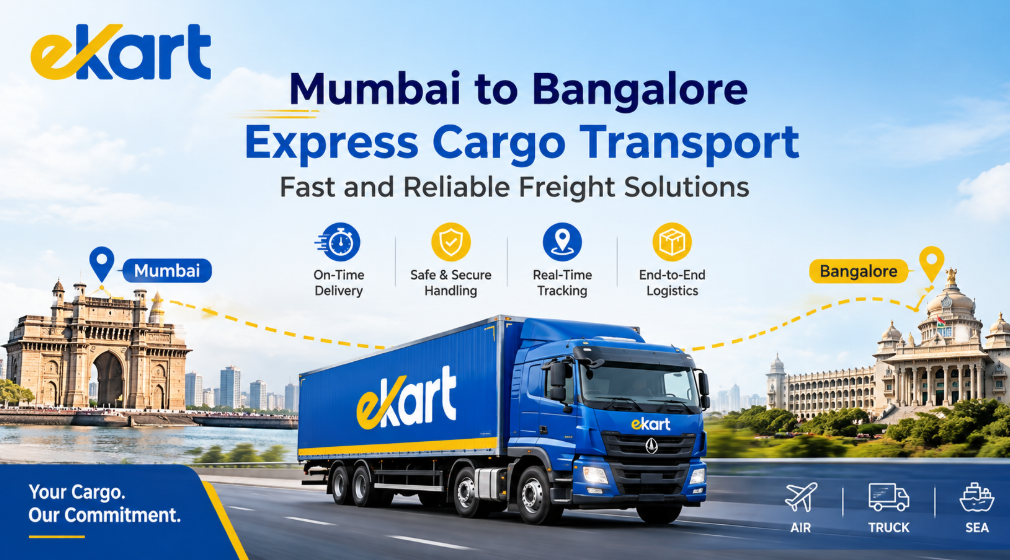
Mumbai and Bangalore are two major business centres with strong connections across technology, manufacturing, retail, e-commerce, consumer products, financial services, and other industries. The regular movement of commercial goods between these cities makes transportation an important part of business operations. Companies moving inventory, components, packaged products, equipment, and other consignments require logistics processes that can accommodate different shipment sizes and delivery requirements.
A reliable Mumbai to Bangalore Express Freight Courier service can support businesses that need organised freight movement between Western and Southern India. With appropriate shipment planning and transportation selection, businesses can manage recurring cargo requirements while keeping their distribution activities aligned with operational schedules.
Why the Mumbai-Bangalore Freight Corridor Matters
Mumbai is a major commercial centre with extensive connections to manufacturing, retail, financial services, and distribution networks. Bangalore is widely recognised as a major technology and business hub, while also supporting manufacturing, e-commerce, consumer markets, and industrial activity. The movement of goods between the two cities therefore serves a wide range of business requirements.
For businesses operating across both markets, express freight courier services can provide a structured option for moving commercial shipments. Freight requirements can range from smaller business consignments to larger volumes of inventory requiring dedicated transportation.
A key part of freight planning is understanding the shipment before selecting the transportation model. Businesses should assess factors such as weight, dimensions, quantity, packaging, delivery location, and required delivery window. This allows logistics teams to determine an appropriate movement strategy.
The Mumbai-Bangalore corridor is particularly relevant for businesses with distributed operations. A company may manufacture or store goods in Mumbai and require inventory at a Bangalore warehouse, retail location, or fulfilment centre. Similarly, businesses operating in Bangalore may need regular movement of products or materials towards Mumbai.
Consistent transportation can help these businesses integrate freight movement into their inventory planning. Instead of treating each shipment as an isolated activity, companies can establish regular movement schedules based on demand and operational requirements.
Choosing the Right Transportation Model
Not every shipment requires the same type of vehicle or transportation arrangement. Shipment volume is one of the most important factors to consider when planning freight movement. Businesses moving large quantities of goods may require dedicated capacity, while smaller consignments can be planned differently.
For businesses searching for transportation availability in their operating areas, truck transport near me can be a useful starting point when assessing local pickup and transportation requirements. However, the choice of service should ultimately depend on the shipment characteristics and the broader route plan rather than proximity alone.
Businesses should also consider how frequently shipments need to move. A company sending occasional cargo may have different requirements from a retailer replenishing inventory several times a week. Regular shipping patterns can make it easier to develop planned transportation cycles and coordinate warehouse operations.
For smaller or partial shipments, part truck load services can provide an option where the shipment does not require the capacity of an entire vehicle. PTL transportation can be relevant for businesses that need to move commercial cargo without filling a complete truck.
Selecting the appropriate model can help businesses align transportation costs and vehicle utilisation with actual shipment requirements. It can also support better planning when shipment sizes fluctuate from one dispatch to another.
Packaging is another important consideration. Goods should be packed according to their physical characteristics and handling requirements. Cartons should be secured properly, while heavier or larger shipments may require pallets or additional protective packaging. Clear labels can also help simplify handling and receiving processes.
The Role of Surface Express Transportation
For domestic freight movement, surface transportation remains an important option for businesses that require structured movement across major road corridors. Surface express services can support businesses that need to move cargo through an organised road transportation network.
Surface freight can be particularly relevant for commercial shipments that are not dependent on air transportation. Businesses can plan regular inventory transfers between warehouses, distribution centres, fulfilment locations, and other commercial destinations.
The success of surface freight depends on several operational factors. Shipment preparation, loading processes, vehicle planning, route coordination, and receiving operations all contribute to an effective transportation cycle. Businesses can improve their logistics planning by providing accurate shipment information at the time of booking or dispatch.
For e-commerce businesses, this becomes even more important because inventory often needs to move between fulfilment centres and regional distribution points. A delay in replenishment can affect stock availability and order processing. Planned surface transportation can therefore become an important part of the overall distribution network.
Businesses should also maintain suitable documentation and shipment information. Accurate addresses, package details, quantity information, and receiving instructions can help reduce avoidable delays during transportation.
Making Mumbai-Bangalore Freight Movement Part of Business Planning
Transportation works most effectively when it is connected to broader supply chain planning. Businesses should assess their historical shipment patterns, inventory requirements, seasonal demand, and warehouse capacity to determine how frequently freight needs to move between Mumbai and Bangalore.
For example, an e-commerce company may experience increased demand during promotional periods. Instead of waiting for inventory to fall below required levels, the company can plan additional freight movements in advance. Manufacturers can similarly schedule the movement of components or finished products around production cycles.
Businesses can also evaluate their transportation strategy regularly. Changes in product mix, customer locations, warehouse structure, or shipment volumes may affect the type of freight service required. Reviewing these factors helps ensure that transportation arrangements continue to match business requirements.
The Mumbai-Bangalore corridor connects two important commercial markets, making reliable freight transportation valuable for companies operating across Western and Southern India. By combining appropriate shipment planning, suitable vehicle capacity, secure packaging, and organised surface movement, businesses can create a more predictable logistics process.
A structured express freight approach can help businesses manage recurring cargo requirements while supporting inventory replenishment and distribution. Whether the shipment is a smaller commercial consignment or a larger movement of inventory, transportation planning should remain aligned with the company’s operational needs and delivery commitments.
Contact Us


.png)




.jpg)
No comments yet. Be the first to comment!
Your email address will not be published. Required fields are marked *