
How Does Delhi to Mumbai Express Freight Courier Support Faster Cargo Movement?
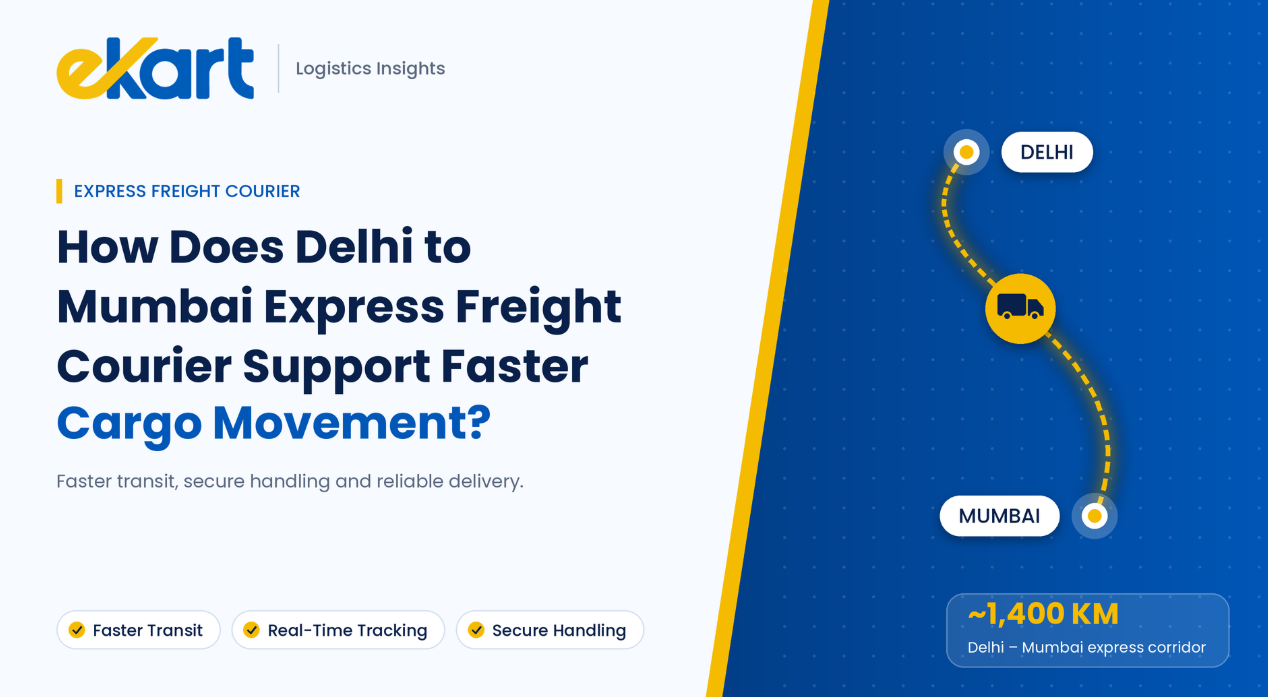
Businesses operating between Delhi and Mumbai need dependable freight movement to keep inventory, supplies, and commercial shipments moving without unnecessary delays. As two of India’s major business and consumption centres, Delhi and Mumbai generate a steady flow of shipments across industries such as retail, manufacturing, electronics, automotive, consumer goods, pharmaceuticals, and e-commerce. For businesses managing regular movement between these markets, a reliable logistics network is essential for maintaining supply continuity.
An efficient Delhi to Mumbai Express Freight Courier service can support businesses that need structured freight movement between the two cities. With suitable shipment planning, surface transportation can help businesses manage larger consignments while maintaining predictable movement across a major commercial corridor.
Understanding Freight Movement from Delhi to Mumbai
Delhi serves as an important commercial and distribution centre for North India, while Mumbai is a major financial, commercial, manufacturing, and consumption market in Western India. The movement of goods between these locations therefore covers a broad range of business requirements. Shipments may include cartons, commercial inventory, machinery components, packaged goods, retail stock, electronic products, and other business consignments.
For businesses handling regular volumes, express cargo transport provides a structured way to move shipments through an organised logistics network. Instead of treating every consignment as an individual movement, businesses can plan transportation around shipment size, delivery requirements, packaging, and destination.
The Delhi-Mumbai corridor also connects several important commercial markets along the wider route. This makes shipment planning particularly important for businesses that operate warehouses, distribution centres, retail locations, or fulfilment operations in multiple regions.
An organised freight process begins with understanding the nature of the shipment. Businesses need to consider the quantity, dimensions, weight, packaging requirements, destination, and expected delivery timeline. This information helps determine an appropriate transportation approach and reduces the possibility of inefficient vehicle utilisation.
Express freight movement can be particularly useful when goods need to reach the destination within a defined delivery window. Businesses can incorporate scheduled freight movement into their supply chain planning instead of arranging transportation only when inventory requirements become urgent.
FTL and Freight Options for Business Shipments
Shipment size plays an important role in determining the appropriate transportation model. Businesses with sufficient cargo volume to utilise an entire vehicle can consider FTL services. Full Truckload transportation is designed for shipments that require dedicated vehicle capacity, making it suitable for larger consignments or movements where businesses prefer their cargo to travel without sharing vehicle space with other shipments.
FTL can be relevant for manufacturers, distributors, retailers, and businesses moving bulk inventory between warehouses. It can also support planned replenishment cycles where a substantial quantity of products needs to be transported from one location to another.
For businesses with smaller shipment volumes, other freight models may be more suitable. The objective is not simply to move goods but to select a transportation arrangement that matches shipment requirements. Factors such as cargo volume, urgency, handling requirements, destination, and frequency should all be considered.
A well-planned freight strategy can also help businesses coordinate inbound and outbound movements. For example, a company operating a warehouse in Mumbai may schedule regular inventory replenishment from Delhi based on historical demand. Such planning allows logistics operations to become part of the broader inventory management process.
Businesses should also pay attention to packaging. Appropriate packaging helps protect products during loading, transportation, unloading, and handling. Clearly labelled cartons, secure pallets, and suitable protective material can make freight handling more organised and reduce avoidable issues during transportation.
Supporting Reliable Cargo Delivery Across the Corridor
The objective of freight transportation extends beyond simply dispatching a shipment. Businesses need a dependable cargo delivery service that can support their operational requirements from shipment preparation through final delivery.
For businesses operating on the Delhi-Mumbai corridor, delivery planning should consider both the origin and destination operations. At the origin, goods need to be prepared and handed over correctly. During transportation, shipment handling and movement need to remain aligned with the planned logistics process. At the destination, the receiving team should be prepared to accept and process the shipment.
This is especially important for e-commerce and retail businesses. Inventory delays can affect warehouse availability, store replenishment, and customer order fulfilment. A structured freight process helps businesses plan stock movement around their operational schedules.
Another consideration is shipment visibility within the logistics workflow. Businesses benefit from having clear information about shipment status and expected movement so that warehouse and operations teams can coordinate their activities. Better coordination can reduce unnecessary waiting time at both origin and destination facilities.
The Delhi-Mumbai route is also relevant for businesses expanding their geographical presence. A company based in Delhi may use Mumbai as a gateway to Western India, while a Mumbai-based business may require regular movement of products towards Northern markets. Consistent freight transportation can therefore support wider distribution strategies.
Building a More Efficient Logistics and Supply Chain Network
Freight transportation is one part of a wider Logistics and Supply Chain strategy. Businesses need to connect transportation with warehousing, inventory planning, order fulfilment, and distribution to create an efficient movement of goods.
A well-planned supply chain begins with understanding demand. Businesses can then determine how much inventory needs to be positioned at different locations and how frequently stock should move between facilities. Regular freight routes can support this planning by creating a consistent framework for inventory transfers.
For example, a retailer with a distribution facility in Delhi and fulfilment requirements in Mumbai can establish scheduled freight movements based on sales patterns. Instead of waiting for inventory levels to become critical, the business can plan replenishment in advance. This approach can support smoother warehouse operations and reduce the pressure associated with last-minute transportation arrangements.
Businesses should also evaluate freight requirements periodically. Shipment volumes can change during seasonal sales, promotional campaigns, product launches, and periods of increased consumer demand. Transportation requirements may therefore need to scale according to business activity.
The Delhi to Mumbai corridor will continue to be important for businesses that require movement between Northern and Western India. By combining appropriate freight models, organised shipment preparation, suitable packaging, and structured logistics planning, businesses can build a transportation process that supports their wider operational goals.
For companies looking for dependable freight movement between these two commercial centres, an organised express freight approach can provide a practical foundation for managing regular cargo requirements. The right transportation strategy can help businesses maintain inventory flow, coordinate distribution activities, and support customers across both markets.
Contact Us


.png)




.jpg)
No comments yet. Be the first to comment!
Your email address will not be published. Required fields are marked *