
How Can Hyderabad to Chennai FTL Services Improve Your Freight Planning?
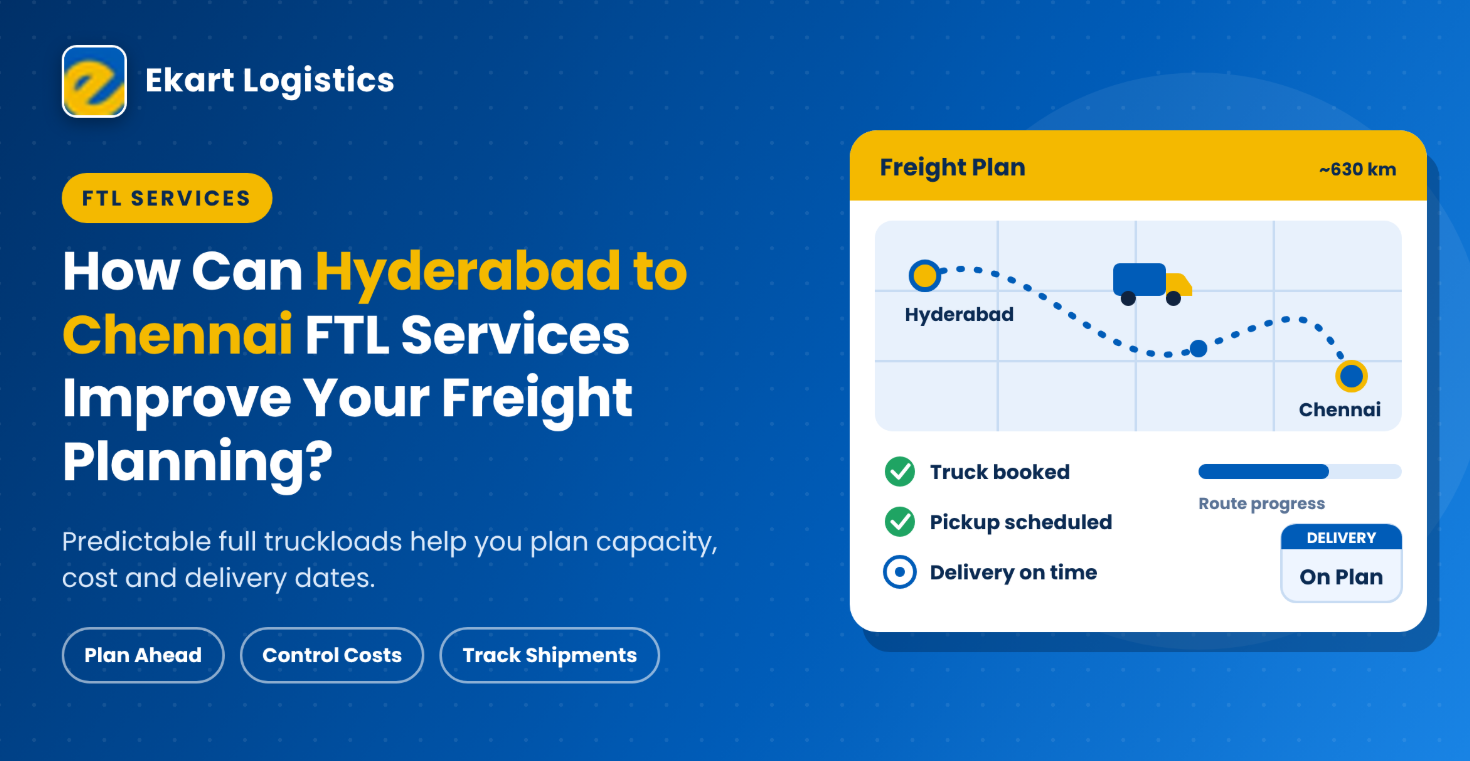
Hyderabad and Chennai are important commercial centres that support manufacturing, industrial production, retail, consumer goods, and wholesale distribution. Businesses operating between these cities often need to transport finished products, raw materials, packaged merchandise, equipment, and warehouse inventory. Hyderabad to Chennai FTL Services provide a dedicated transportation option for companies that require an entire truck for their consignments. Full Truck Load transportation can be suitable when shipment volumes justify dedicated vehicle capacity or when businesses need to coordinate their goods around specific loading and dispatch requirements.
The suitability of a dedicated truck depends on the nature and size of the shipment. A manufacturer transferring products between facilities may require substantial vehicle capacity, while a distributor may need to move a large order to a regional warehouse. Businesses transporting industrial supplies or bulky merchandise may also benefit from a planned loading arrangement. Before booking, companies should confirm the shipment’s total weight, cargo dimensions, packaging requirements, vehicle needs, and intended dispatch date. These details help determine whether the proposed transportation arrangement is appropriate.
Road freight planning involves several activities beyond moving goods from one city to another. Businesses must prepare the consignment, arrange suitable packaging, complete documentation, coordinate loading, and ensure that the receiving location is ready. When these activities are planned together, dispatch teams can establish a clearer sequence of responsibilities. The transportation provider should also receive accurate information about the goods and any special requirements before the service is confirmed.
Companies should consider whether palletised cargo or another specialised handling arrangement is appropriate for their shipments. A pallet courier service may be relevant when businesses need to transport packages grouped securely on pallets, depending on the provider’s service scope and the dimensions of the consignment. Palletised shipments can help organise goods for suitable handling equipment, but the pallet type, load stability, and vehicle configuration must match the cargo. Businesses should confirm these requirements before dispatch rather than assume that pallet handling is automatically included.
Benefits of Planned Full Truck Load Transportation
A dedicated vehicle can help businesses organise large freight movements with a clearer loading and dispatch plan. Because the truck is allocated to a particular consignment, the shipper can coordinate cargo preparation around its own requirements. This may be useful for bulk merchandise, regular warehouse transfers, manufacturing supplies, and large commercial orders. It can also reduce the complexity associated with combining different customers’ goods in a shared vehicle. Nevertheless, proper packaging, secure loading, and accurate documentation remain essential for effective transportation.
Planning is particularly important when freight movements are connected to production and inventory schedules. A business sending products from Hyderabad to a Chennai warehouse may need to coordinate arrival with available storage space and subsequent distribution activities. If the goods arrive before the receiving team is prepared, the shipment may create additional operational pressure. Similarly, a delay in dispatch can affect inventory availability and planned business activities. Aligning transportation with warehouse readiness helps organisations manage these dependencies more effectively.
Businesses should assess transportation costs using the complete service requirement. The final amount may depend on vehicle type, cargo weight, dimensions, route conditions, tolls, loading arrangements, and additional handling requirements. Companies should request quotations using accurate shipment information and clarify which services are included. Comparing proposals on a like-for-like basis helps decision-makers understand the differences between available options and select an arrangement that meets their budget and operational priorities.
Provider evaluation should also consider communication, route suitability, booking procedures, documentation requirements, and the clarity of service commitments. Businesses need to know how to communicate changes to shipment details and whom to contact if a problem arises. Transit estimates should be confirmed rather than assumed, as traffic, weather, road conditions, and operational circumstances can affect road freight movements. Establishing realistic expectations helps companies plan around potential disruptions.
Freight Coordination with Ekart Logistics
Ekart Logistics can be considered by businesses evaluating logistics providers for commercial transportation requirements. Companies arranging freight between Hyderabad and Chennai should first define the shipment’s origin, destination, cargo type, quantity, weight, dimensions, and expected dispatch window. This information provides a starting point for assessing the required vehicle and determining which service arrangements may be available. Any restrictions at loading or receiving locations should also be communicated before the booking is finalised.
Businesses comparing a courier and cargo company should look beyond general service descriptions and assess the provider against their actual freight requirements. Relevant considerations include shipment capacity, route availability, documentation procedures, pricing transparency, handling arrangements, and communication processes. A provider suitable for small parcels may not necessarily offer the appropriate arrangement for a large commercial consignment. Companies should confirm that the proposed service can accommodate the shipment’s dimensions, weight, and operational requirements.
Businesses can improve dispatch preparation by establishing a consistent verification process. Warehouse teams should confirm that the correct goods are ready, check packaging and labels, and ensure that supporting documents are complete. Where goods are placed on pallets, staff should verify that the pallets are suitable for the load and that the cargo is secured appropriately. These preparations help reduce confusion during loading and allow the receiving team to identify the consignment more easily.
Coordination should continue throughout the operational process. The shipper should establish clear communication with the transportation provider and receiving location, particularly when the shipment is linked to a time-sensitive business activity. Teams should agree on how important updates will be shared and how changes to dispatch or receiving arrangements will be handled. Clear communication does not eliminate every delay, but it can help businesses respond to issues more systematically.
Organisations can visit ekartlogistics.in to review Ekart Logistics services and identify the appropriate channel for discussing their transportation needs. Before confirming a shipment, businesses should verify route availability, vehicle suitability, service conditions, pricing, and the expected transit arrangement directly. Specific handling requirements and additional charges should also be clarified in advance. Confirming these details allows the business to make an informed decision and establish realistic expectations for the movement.
Creating an Effective Hyderabad-to-Chennai Freight Strategy
An effective freight plan should reflect the business’s actual shipment patterns. Companies can review how often they transport goods between Hyderabad and Chennai, the average size of each consignment, seasonal changes in demand, and the costs associated with each movement. This information can help determine whether dedicated truck capacity is appropriate for regular shipments and whether booking practices need to change when volumes fluctuate. Reviewing historical data also helps businesses plan transportation requirements earlier.
Warehouse readiness is another important factor. Goods should be available for loading at the agreed time, and the receiving location should have sufficient space and staff to handle the incoming consignment. Businesses can improve coordination by confirming dispatch readiness, documenting shipment details, and communicating receiving requirements in advance. These practices help reduce avoidable waiting and support more consistent warehouse operations.
Companies researching Hyderabad to Chennai Express Cargo Transport should confirm whether the available service matches their shipment volume, vehicle requirements, and scheduling needs. Businesses comparing Hyderabad to Chennai Express Freight Courier options should also evaluate pricing, documentation, route suitability, and handling arrangements. The service scope and any time-sensitive commitments should be confirmed directly with the provider before booking.
A planned surface express arrangement may be relevant to businesses considering road-based freight options, depending on the available service and the requirements of the consignment. Companies should compare the proposed transportation method with their shipment size, expected schedule, and operational priorities. They should also confirm any conditions that apply to loading, receiving, and transit arrangements. Selecting a service based on verified details helps avoid unrealistic expectations.
Businesses should periodically evaluate freight performance. Relevant considerations include whether the correct vehicle was selected, whether the shipment was properly prepared, whether documentation was accurate, and whether receiving arrangements worked as planned. Recording recurring problems can help organisations identify process improvements. For example, repeated loading delays may indicate a need to improve warehouse preparation or coordinate vehicle arrival more effectively.
Hyderabad to Chennai FTL Services can support businesses that need dedicated truck capacity for substantial commercial shipments between these cities. Careful vehicle selection, accurate documentation, appropriate packaging, clear communication, and coordinated receiving arrangements all contribute to a more structured transportation process. Ekart Logistics can be considered during the selection process, subject to confirmation of service availability and the specific requirements of the shipment. By aligning freight decisions with operational needs, businesses can improve distribution planning and support more effective supply chain management.
Contact Us






No comments yet. Be the first to comment!
Your email address will not be published. Required fields are marked *