
How Can a Warehouse with Inventory Management Software Transform Your Business?
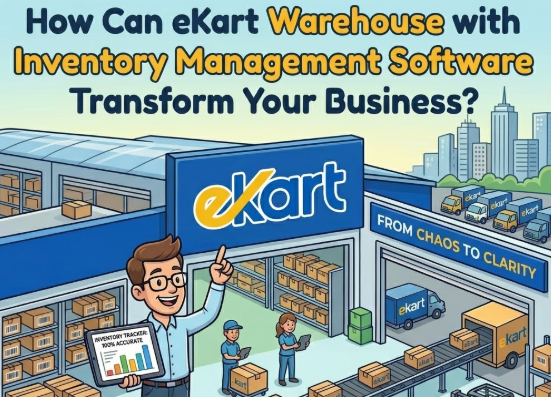
Managing inventory efficiently has become one of the biggest challenges for modern businesses. Whether you operate an eCommerce brand, a retail chain, or a manufacturing business, inventory accuracy and warehouse efficiency directly impact customer satisfaction, operational costs, and profitability. As supply chains become more complex and customer expectations continue to rise, businesses can no longer rely on outdated systems or manual inventory tracking methods. This is where a warehouse with inventory management software becomes an essential investment.
A warehouse equipped with advanced inventory management software combines physical storage capabilities with digital intelligence. It enables businesses to manage stock, streamline warehouse workflows, and optimize order fulfillment through a centralized system. Instead of handling inventory across disconnected spreadsheets or multiple software platforms, organizations can gain complete control over stock movement, warehouse operations, and distribution from a single integrated solution. This not only improves operational efficiency but also helps businesses scale with confidence.
Why Modern Businesses Need Smarter Warehousing
Traditional warehouse operations often create bottlenecks that can affect the entire supply chain. Inaccurate stock records, misplaced inventory, delayed order processing, and poor visibility into stock levels can lead to lost sales, overstocking, and customer dissatisfaction. For businesses handling high order volumes or operating across multiple sales channels, these challenges can quickly become costly.
A warehouse with inventory management software addresses these issues by creating a more organized and efficient operating environment. It helps businesses maintain accurate stock records, optimize storage utilization, and improve warehouse workflows. Every stage of the inventory lifecycle—from receiving goods and storing them to picking, packing, and dispatching—is streamlined through automated processes and centralized oversight.
This is particularly important for businesses focused on inventory and warehouse management for online sellers. As online orders increase, efficient inventory handling becomes critical for maintaining fast delivery timelines and ensuring a positive customer experience. A smarter warehousing system allows businesses to stay agile, responsive, and competitive in an increasingly demanding marketplace.
The Role of Third-Party Warehousing in Business Growth
Many businesses today are turning to third-party warehousing to improve scalability and reduce operational complexity. By outsourcing warehousing and fulfillment to an experienced logistics partner, companies can focus on growth while benefiting from specialized infrastructure and expertise.
Third-party warehousing for 3PL offers businesses access to advanced storage facilities, professional inventory handling, and optimized fulfillment processes without the need for significant capital investment. When combined with inventory management software, this model becomes even more powerful. Third-party warehousing with inventory management solutions allows businesses to maintain visibility and control over stock while leveraging the operational efficiency of a dedicated warehousing provider.
These solutions are especially valuable for businesses in retail, eCommerce, and FMCG sectors. Third-party warehousing services for retail supply-chain ensure products are stored, managed, and distributed efficiently across multiple locations. Similarly, third-party warehousing for FMCG brands helps maintain rapid stock turnover and consistent product availability. Businesses can also benefit from third-party warehousing with end-to-end distribution solutions, which integrate storage, fulfillment, transportation, and final delivery into one seamless ecosystem.
Key Benefits of Warehouse Inventory Management Software
The advantages of implementing a warehouse with inventory management software extend far beyond simple stock tracking. One of the most significant benefits is improved inventory accuracy. Accurate inventory records help businesses avoid stockouts, reduce excess inventory, and minimize costly errors. Better stock control also supports more informed purchasing and replenishment decisions.
Another major benefit is streamlined order fulfillment. Efficient warehouse workflows ensure that receiving, storage, picking, packing, and shipping processes are completed quickly and accurately. This reduces order processing times, minimizes fulfillment errors, and improves customer satisfaction.
Scalability is another critical advantage. As businesses grow, warehouse operations often become more complex. A scalable warehousing solution can accommodate increased inventory volumes, additional product lines, and expanding distribution networks without disrupting operations. This flexibility is particularly important for businesses experiencing seasonal demand fluctuations or rapid market expansion.
In addition, integrated Warehousing Storage Solutions help businesses optimize space utilization, improve labor productivity, and reduce operational costs. By leveraging technology and automation, businesses can achieve greater efficiency while maintaining better control over their supply chain.
Choosing the Right Warehousing Partner for Long-Term Success
Selecting the right warehousing partner is a strategic decision that can significantly influence business performance. The ideal partner should offer more than just storage space. They should provide a comprehensive solution that includes advanced inventory management software, scalable infrastructure, and nationwide fulfillment capabilities.
Businesses should look for providers with proven expertise in third-party warehousing solutions for eCommerce, retail, and enterprise distribution. A strong network presence is equally important, especially for companies seeking third-party warehousing in Delhi NCR, Mumbai, Bangalore, Kolkata, Surat, or Vadodara. Access to strategically located warehouses ensures faster delivery, lower transportation costs, and improved market reach.
When evaluating providers, consider factors such as technology capabilities, integration options, fulfillment speed, and industry specialization. The best providers combine warehousing, inventory management, and distribution into a unified solution that supports long-term growth.
Ultimately, a warehouse with inventory management software is more than just an operational tool—it is a strategic asset. It enables businesses to improve efficiency, reduce costs, and deliver better customer experiences. In today’s competitive market, investing in smart warehousing is not simply an option; it is a necessity for sustainable growth and supply chain excellence.
Contact Us


.png)




.jpg)
No comments yet. Be the first to comment!
Your email address will not be published. Required fields are marked *