
Struggling with Inventory Chaos? Here’s How Smart Inventory Management Can Fix It
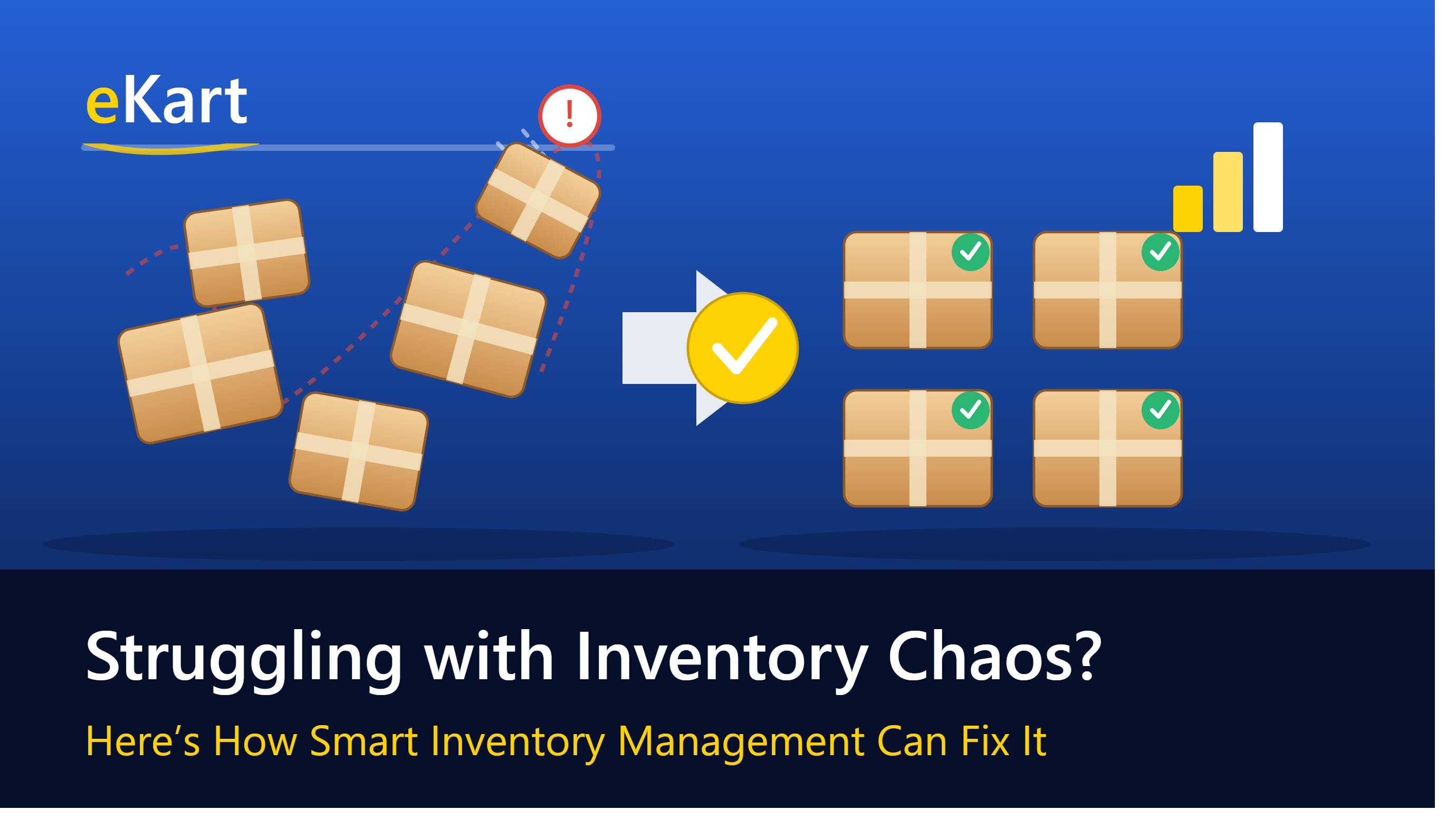
Inventory chaos is one of the most common problems businesses face as they grow. What starts as a manageable process can quickly become overwhelming when order volumes increase, product catalogs expand, and customer expectations rise. Businesses often struggle with stock discrepancies, delayed replenishment, misplaced inventory, and inaccurate forecasting. These issues can lead to stockouts, excess inventory, higher storage costs, and dissatisfied customers.
In today’s competitive market, inventory management is no longer limited to tracking products on warehouse shelves. It has become a critical component of the entire Logistics and Supply Chain ecosystem. Every inventory decision affects warehousing, transportation, order fulfillment, and customer satisfaction. Whether a company operates through physical stores, online marketplaces, or direct-to-consumer channels, maintaining accurate inventory visibility is essential for sustainable growth.
As eCommerce continues to expand, businesses need smarter ways to manage inventory across multiple locations and sales channels. Without the right systems in place, inventory chaos can quickly impact operational efficiency and profitability.
Why Traditional Inventory Management Falls Short
Many businesses still rely on spreadsheets, manual stock counts, and disconnected systems to manage inventory. While these methods may work during the early stages of business growth, they often become ineffective as operations scale. Manual processes are prone to human error, delayed updates, and inconsistent reporting, making it difficult to maintain accurate inventory records.
The challenge becomes even greater for businesses involved in online retail. Managing inventory across multiple platforms requires constant synchronization of stock levels and order data. Without proper visibility, businesses risk overselling products, missing customer orders, and creating fulfillment delays. This is particularly problematic for companies that depend on a reliable delivery partner for ecommerce to meet customer delivery expectations.
Traditional inventory practices also limit a company’s ability to forecast demand accurately. Businesses often end up carrying excess inventory to avoid stockouts, which increases storage costs and ties up working capital. At the same time, unexpected spikes in demand can result in inventory shortages that lead to lost sales opportunities.
To remain competitive, organizations need inventory systems that provide real-time visibility, automation, and actionable insights rather than relying on outdated manual processes.
How Smart Inventory Management Solutions Transform Operations
Modern Inventory Management Solutions provide businesses with the tools needed to gain complete control over inventory movement and warehouse operations. By leveraging automation, real-time tracking, and advanced analytics, companies can improve inventory accuracy while reducing operational complexity.
A smart inventory system enables businesses to track stock levels across multiple locations in real time. This visibility allows teams to make faster decisions regarding replenishment, allocation, and fulfillment. Automated alerts can notify managers when inventory reaches predefined thresholds, helping prevent both stock shortages and excess inventory accumulation.
Businesses can also benefit from integrating inventory systems with warehouse with inventory management software that supports receiving, put-away, picking, packing, and shipping processes. This integration improves warehouse productivity and reduces errors throughout the fulfillment cycle.
For online retailers, effective inventory and warehouse management for online sellers ensures that inventory data remains synchronized across sales channels, warehouses, and fulfillment centers. This minimizes order errors, improves customer satisfaction, and supports faster delivery times.
Many growing companies are also turning to third-party warehousing solutions for eCommerce to increase flexibility and scalability. These solutions allow businesses to expand storage capacity and improve fulfillment efficiency without investing heavily in warehouse infrastructure. When combined with intelligent inventory management systems, third-party warehousing creates a streamlined operation capable of supporting rapid business growth.
Building a Faster and More Resilient Supply Chain
Inventory management is most effective when it works as part of a larger supply chain strategy. Accurate inventory data supports better planning, improved transportation efficiency, and faster order fulfillment. Businesses that connect inventory management with warehousing and distribution operations can create a more agile and responsive supply chain.
For companies focused on online retail, integrating inventory management with eCommerce shipping solutions helps ensure that products move efficiently from warehouse shelves to customers’ doorsteps. Real-time inventory visibility allows businesses to process orders faster, reduce fulfillment delays, and improve delivery performance.
In addition, partnering with providers that offer third party logistics for ecommerce can help businesses simplify complex logistics operations. These providers combine warehousing, inventory management, transportation, and fulfillment services into a single integrated solution, enabling organizations to focus on growth while maintaining operational efficiency.
As supply chains become increasingly complex, businesses can no longer afford to operate with limited inventory visibility. Smart inventory management provides the control, accuracy, and flexibility needed to reduce costs, improve service levels, and support long-term growth.
The companies that succeed in today’s fast-moving marketplace are those that replace inventory chaos with data-driven decision-making. By investing in modern inventory technologies and integrated logistics solutions, businesses can build stronger operations, improve customer experiences, and create a supply chain that is prepared for future growth.
Contact Us


.png)




.jpg)
No comments yet. Be the first to comment!
Your email address will not be published. Required fields are marked *