
Third-Party Warehousing for FMCG Brands: Enabling Speed, Scale, and Consistency
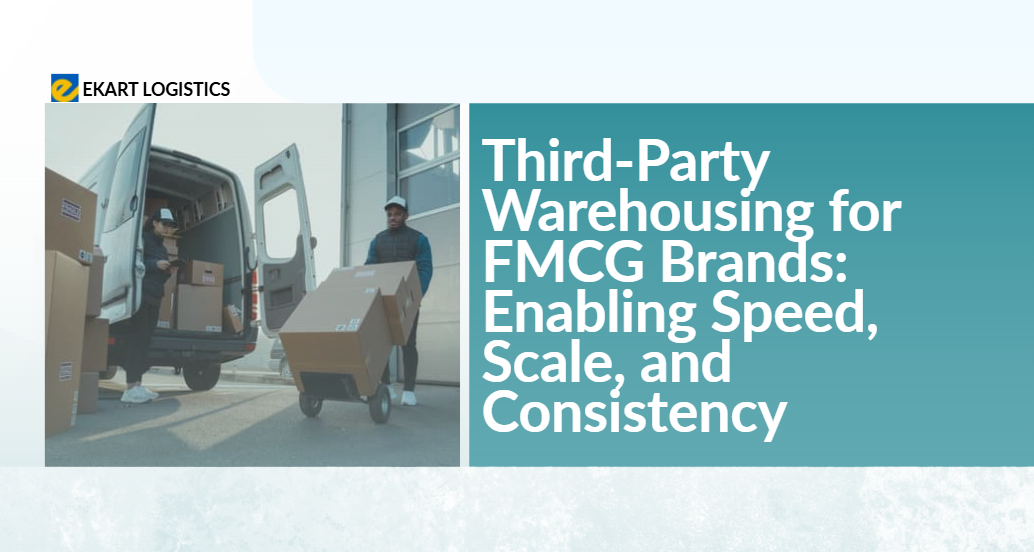
FMCG brands operate in one of the most demanding supply-chain environments, where speed, availability, and consistency directly impact sales and brand loyalty. Products move quickly, shelf life is limited, and customer expectations around availability continue to rise. In this landscape, third-party warehousing for FMCG brands has become a strategic necessity rather than a support function. Modern warehousing enables brands to manage high inventory turnover, maintain product quality, and ensure uninterrupted supply to markets across regions.
As FMCG brands expand their distribution through traditional retail and digital channels, logistics complexity increases. Warehousing must support bulk storage, frequent dispatches, and rapid order processing. Third-party warehousing provides structured infrastructure, trained operations teams, and technology-driven processes that align with the fast-moving nature of FMCG supply chains. When combined with an efficient parcel courier service, brands can maintain consistent product flow and minimise stockouts.
Why FMCG Brands Depend on Third-Party Warehousing
The FMCG sector is characterised by high-volume, low-margin products that require cost-efficient logistics operations. Managing warehousing in-house often leads to increased fixed costs and limited scalability. Third-party warehousing allows FMCG brands to operate on a flexible model, scaling storage and manpower based on demand patterns. This flexibility is especially important during seasonal peaks, promotional campaigns, and new product launches.
Another key reason FMCG brands rely on third-party warehousing is speed to market. Products need to reach distributors, retailers, and consumers quickly to remain competitive. Integration with B2C courier services and express courier networks ensures faster movement of goods from warehouses to end destinations. Brands searching for a courier service near me often benefit from warehouses located close to consumption centres, enabling quicker dispatch and reduced transit time.
Integrated Warehousing and Delivery Solutions for FMCG Distribution
Third-party warehousing for FMCG brands goes beyond storage by integrating fulfilment and delivery into a single operational framework. Warehouses act as central hubs where inventory is received, sorted, and dispatched through optimised workflows. Real-time inventory visibility helps brands track stock movement, manage replenishment cycles, and prevent overstocking or shortages.
Delivery speed plays a critical role in FMCG distribution, especially for products with high demand or short shelf life. Warehousing facilities supported by express delivery services enable one day courier service, next-day delivery service, and even same-day delivery for businesses in select locations. This ensures that products reach retailers and consumers quickly while maintaining freshness and availability. By partnering with a reliable delivery partner for ecommerce, FMCG brands can extend their reach across digital and offline channels.
Supporting eCommerce and Direct-to-Consumer FMCG Channels
The growth of online grocery and FMCG marketplaces has added a new dimension to distribution strategies. Third-party warehousing supports e-commerce courier service requirements by enabling efficient picking, packing, and dispatch of individual orders. Warehouses designed for mixed-use fulfilment can handle both bulk retail shipments and small parcel deliveries without operational disruption.
Integration with express courier and B2C courier services allows FMCG brands to meet customer expectations for fast and reliable delivery. Whether it is next day delivery service or same day delivery for business customers, third-party warehousing ensures that orders are processed and dispatched with speed and accuracy. This capability is essential for FMCG brands looking to strengthen their digital presence and build trust with online consumers.
Enhancing Supply-Chain Efficiency and Cost Control
Cost optimisation is a major advantage of third-party warehousing for FMCG brands. By outsourcing warehousing and fulfilment, brands reduce capital expenditure on infrastructure, technology, and labour. Instead, they operate on a variable cost model that aligns with actual business volume. Warehousing partners manage day-to-day operations, allowing FMCG brands to focus on product innovation, marketing, and market expansion.
Operational efficiency is further improved through data-driven processes and performance monitoring. Brands gain access to insights on inventory turnover, dispatch timelines, and delivery performance. This transparency helps identify inefficiencies and improve decision-making across the supply chain. With integrated ecommerce courier service capabilities, FMCG brands can maintain consistent service levels while optimising logistics costs.
Building a Resilient FMCG Supply Chain
In a competitive FMCG market, supply-chain reliability is a key differentiator. Third-party warehousing for FMCG brands provides the infrastructure, technology, and expertise required to manage fast-moving inventory and high delivery expectations. By combining warehousing with express delivery services and dependable courier networks, brands can ensure uninterrupted product flow across regions.
As consumer demand continues to evolve, FMCG brands must adopt agile and scalable logistics strategies. Third-party warehousing offers the flexibility to adapt to changing market conditions while maintaining speed and efficiency. With support for parcel courier service, B2C courier services, and rapid delivery options, FMCG brands can build resilient supply chains that support long-term growth and customer satisfaction.
Contact Us


.png)




.jpg)
No comments yet. Be the first to comment!
Your email address will not be published. Required fields are marked *